
Have you ever come home after a long day and found your cat rubbing its face against your legs, circling your feet, or gently pressing its head against your hand? This familiar behavior may look like a simple display of affection, but it can communicate several different messages.
Cats rely heavily on scent, body language, and physical contact to interact with people and other animals. Rubbing can help them greet familiar companions, exchange scents, explore unfamiliar surroundings, and communicate their needs.
Understanding why cats rub against people allows owners to respond appropriately without misinterpreting every interaction as a request for cuddles.
In this guide, Cat CareHub explores the main reasons behind feline rubbing, how to interpret the accompanying body language, and when this otherwise normal behavior may indicate a health concern.
1. Why Cats Rub Against You: Affection, Greetings, and Trust
One of the most common reasons cats rub against their owners is to initiate friendly social contact. However, the meaning of this gesture depends on the situation, the cat’s personality, and the rest of its body language.
Your Cat May Be Saying Hello or Strengthening Your Bond
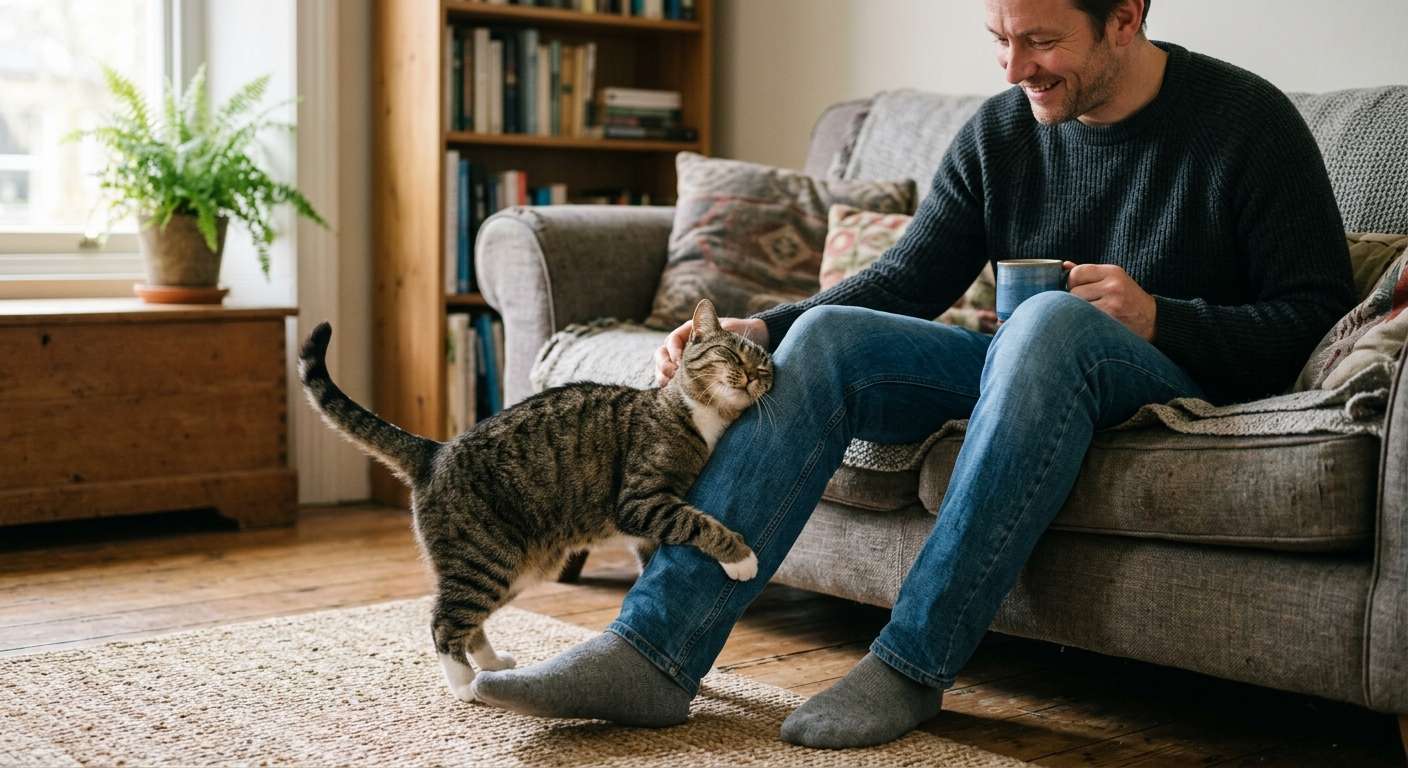
When your cat approaches you, raises its tail, and rubs its cheeks or body against your legs, it is often greeting you in a familiar, socially positive way.
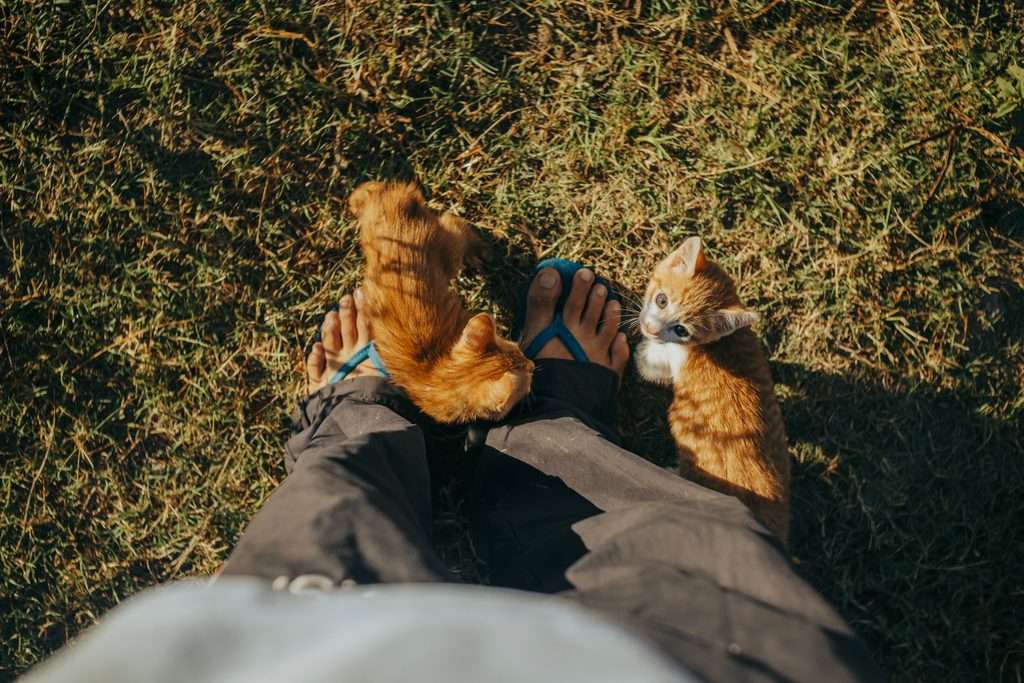
You may notice this behavior when you return home, wake up in the morning, or enter a room where your cat has been resting. Some cats also wrap their tails around their owner’s legs or gently nudge an offered hand.
These interactions can reflect familiarity and a positive relationship. Cats that feel comfortable with someone may voluntarily approach, remain nearby, and initiate contact.
Nevertheless, rubbing does not automatically mean that a cat wants to be picked up or stroked. Some cats prefer brief contact before moving away, while others enjoy longer interactions.
How to respond: Let your cat initiate contact and observe what happens next. If it leans into your hand, keeps its body relaxed, and returns for more contact, gentle petting may be welcome. If it turns away, flattens its ears, or repeatedly lashes its tail, give it space.
Building a strong relationship also requires patience and consistency. Read our guide on how to care for a kitten during its first week to learn why gentle handling and a predictable environment matter from the beginning.
2. Scent Marking: How Cats Use Rubbing to Create Familiarity
Cats experience their environment through an exceptionally important sense of smell. They also use scent as part of their social communication, which helps explain why they repeatedly rub their faces against familiar people, furniture, doorways, and other objects.
Facial Pheromones Help Cats Recognize Familiar People and Places
Cats have scent-producing glands around areas including their cheeks, chin, and forehead, as well as other parts of their bodies. When a cat rubs these areas against you or an object, it can deposit scent-related chemical signals, including pheromones.
This behavior is often described as scent marking. Unlike urine spraying, facial rubbing is a normal, non-destructive way for cats to leave familiar scents in their surroundings.
A cat may rub against your legs after you return home because your clothing carries unfamiliar outdoor smells. Rubbing allows it to exchange scents and renew familiar scent cues.
This does not necessarily mean that your cat considers you its property in the human sense. Instead, scent exchange is part of how cats interact with their social and physical environment.
Familiar smells may contribute to a sense of security, although the exact emotional effect varies between cats.
Scent also plays a role in relationships between cats. Friendly cats may rub their faces against each other, creating overlapping scent profiles within a social group. This can help maintain familiarity, especially in multi-cat households.
For more background, Cornell University’s Feline Health Center explains how cats use scent marking.
A practical tip: Avoid repeatedly washing every surface your cat rubs against simply because it has been marked with facial scent. Normal household cleaning is important, but maintaining familiar resting areas, bedding, and scratching posts can help preserve environmental consistency.
If you introduce another cat, give both animals time to become familiar with each other’s scent before expecting them to interact comfortably. Rushing introductions can create stress rather than friendship.
3. Communication and Curiosity: What Your Cat Wants You to Know
Although rubbing is frequently associated with affection and scent marking, cats may also use it to investigate unfamiliar individuals or communicate a desire for food, attention, or activity.
The surrounding circumstances often provide the best clues about what your cat is trying to communicate.
Rubbing Can Signal Curiosity, Hunger, or a Request for Attention
When a cat encounters a visitor or another animal, it may approach cautiously and rub against them. This can be part of an exploratory interaction, allowing the cat to investigate unfamiliar scents.
However, approaching and rubbing are not automatic invitations to pet the cat. A cat may be curious without wanting close physical contact.
If an unfamiliar cat approaches you, remain calm and allow it to decide whether to continue interacting. Avoid reaching over its head or attempting to pick it up.
Rubbing can also become part of a learned communication routine. For example, if your cat regularly receives breakfast after rubbing against your legs in the kitchen, it may repeat that behavior because it has learned that the interaction often precedes food.
Other common examples include:
- Food requests: Your cat rubs against you near its usual feeding time or walks toward its food bowl.
- Attention seeking: It nudges your hand, circles your feet, or returns repeatedly when you stop interacting.
- Playtime requests: It approaches with an alert posture, follows your movements, or brings a toy nearby.
- Social contact: It rubs against you and then settles close to you without asking for anything else.
The important distinction is that no single gesture has a universal meaning. Interpret rubbing alongside your cat’s routine, vocalizations, posture, and immediate environment.
For example, a cat rubbing against the kitchen cabinet at its usual mealtime may be anticipating food, whereas the same behavior after you return from work may be a greeting.
If rubbing becomes persistent around feeding time, maintain a consistent meal schedule and provide appropriate portions rather than offering treats every time your cat nudges you. For guidance on age-related dietary needs and appropriate feeding, see our senior cat food and nutrition guide.
An important distinction: If your cat suddenly becomes unusually demanding, starts vocalizing much more frequently, or displays a major change in its normal routine, do not automatically assume that it simply wants attention. Changes in behavior can sometimes accompany discomfort or illness.
4. When Excessive Rubbing May Indicate a Health Problem
Most ordinary rubbing against people and furniture is harmless. However, rubbing that becomes unusually frequent, intense, or repetitive deserves attention, particularly when it is accompanied by scratching, skin changes, or abnormal movements.
Warning Signs That Should Not Be Ignored
Normal social rubbing generally involves brief contact with the cheeks, head, or body. A cat may repeat the behavior several times a day without any problem.
Medical concerns become more likely when the rubbing appears driven by itching, pain, irritation, or neurological changes rather than ordinary social interaction.
Possible causes of abnormal rubbing or related behaviors include:
- Allergies or skin irritation: Affected cats may scratch, lick, or rub their face and body repeatedly.
- Fleas or other parasites: Itching can lead to persistent scratching, biting, and rubbing.
- Ear problems: Ear inflammation or parasites may cause frequent head shaking, ear scratching, or rubbing the head against objects.
- Feline hyperesthesia: Some cats experience episodes of extreme skin sensitivity, particularly along the back, accompanied by unusual movements or intense grooming.
- Neurological or other medical conditions: Persistent, abnormal head pressing or disorientation may indicate a serious problem requiring prompt veterinary assessment.
Look for additional warning signs such as hair loss, redness, wounds, swelling, repeated head shaking, unusual eye movements, a head tilt, stumbling, or a sudden change in behavior.
Pay particular attention to head pressing, which is different from ordinary affectionate headbutting. If your cat persistently presses its head against a wall or other hard surface, especially alongside confusion, weakness, or difficulty walking, seek urgent veterinary care.
Cornell University provides further information about feline skin diseases and their clinical signs and feline hyperesthesia syndrome.
Do not attempt to diagnose the cause yourself or apply human skin creams and medications without veterinary advice. The appropriate treatment depends on the underlying condition.
A useful habit is to record when the behavior occurs, which body part your cat rubs, and whether other symptoms appear. A short video can also help your veterinarian assess an unusual episode.
If the rubbing is new, persistent, or accompanied by physical symptoms, arrange a veterinary examination. Seek urgent attention for head pressing, marked disorientation, seizures, or sudden difficulty walking.
“Until he extends the circle of his compassion to all living things, man will not himself find peace.”
Albert Schweitzer
Final Thoughts
Cats rub against people for several reasons, including greeting familiar companions, exchanging scents, exploring their surroundings, and requesting attention or food.
In many cases, this behavior is a normal part of feline communication and can reflect a comfortable relationship between a cat and its owner. Nevertheless, rubbing should always be interpreted in context rather than treated as a guaranteed sign of affection.
Pay attention to your cat’s posture, routine, and willingness to continue interacting. Respecting its preferences helps build trust and makes everyday interactions more rewarding.
Most importantly, recognize the difference between ordinary social rubbing and a sudden, compulsive, or medically concerning change in behavior. When in doubt, consult a veterinarian to protect your cat’s health and well-being.