Introduction
A cat’s coat does more than make it look beautiful. It helps regulate body temperature, protects the skin, and provides a barrier against environmental irritants. Although cats are naturally clean animals that spend considerable time grooming themselves, their natural grooming habits do not always provide everything their coats need.
When regular grooming is neglected for too long, loose hair, dirt, and natural oils can accumulate. The coat may gradually become tangled, greasy, dull, or matted. In more serious cases, neglected fur can pull tightly against the skin, cause discomfort, trap moisture, and contribute to skin irritation.
The effects of skipping regular cat grooming depend on several factors, including coat length, age, health, activity level, and the cat’s ability to groom independently. Long-haired breeds generally need more assistance than short-haired cats, while older, overweight, or less mobile cats may struggle to maintain their coats.
Understanding what happens when grooming is neglected can help cat owners recognize early warning signs, prevent painful matting, and maintain a healthy, comfortable coat.
1. Loose Hair and Dirt Begin to Accumulate in the Coat
One of the earliest consequences of neglecting cat grooming is the accumulation of loose hair, dust, and environmental debris. Cats naturally shed throughout the year, although shedding may become heavier during seasonal changes.
Normally, licking and regular brushing help remove some loose fur. However, when grooming is insufficient, dead hairs can remain trapped between healthy strands, particularly in dense or long coats.
Why Does an Ungroomed Cat’s Coat Become Dirty and Dull?
As loose hair accumulates, it can prevent the coat from lying smoothly. Dust, outdoor debris, and small particles may become trapped, making the fur look less clean and feel rough.
Natural skin oils also spread unevenly across the coat. This can contribute to a greasy appearance, especially around areas that are difficult for cats to reach.
Common early signs include:
- Loose hair collecting around the body.
- Fur that looks less shiny or feels rough.
- Small tangles appearing behind the ears and around the neck.
- More noticeable shedding around the home.
- Dust or debris becoming trapped in the coat.
These changes do not necessarily indicate a medical problem. However, persistent greasiness, excessive dandruff, or a sudden change in coat quality deserves attention because it may also indicate an underlying skin or health condition.
Regular brushing helps remove loose hair before it becomes trapped and reduces the amount of fur your cat may swallow while self-grooming.
2. Tangled Fur Gradually Develops Into Painful Mats
One of the most noticeable consequences of prolonged grooming neglect is matted fur. Mats form when loose and healthy hairs become intertwined, creating compact knots that become increasingly difficult to separate.
This problem is particularly common in long-haired cats, whose coats contain more hair that can become tangled during movement, sleeping, and everyday activities.
How Do Small Knots Turn Into Serious Matting?
Initially, a tangle may look like a small knot that can be gently separated with a suitable grooming comb. However, when loose hair continues accumulating, the knot becomes tighter and can develop into a dense mat.
Certain areas are especially vulnerable:
- Behind the ears.
- Under the chin.
- Around the neck and collar area.
- Under the front legs and armpits.
- Along the belly and inner thighs.
- Around the hindquarters and base of the tail.
As mats become tighter, they pull on the surrounding skin whenever the cat walks, stretches, or changes position. This can cause discomfort and make ordinary movements unpleasant.
Severe matting may also trap moisture and debris close to the skin. The affected areas can become irritated, and hidden skin problems may be difficult to notice beneath dense fur.
Never assume that a large mat can be safely removed by pulling or cutting it with ordinary household scissors. Cat skin is thin and can be pulled into the mat, making accidental injuries surprisingly easy. Large or tight mats should be assessed and removed by a veterinary professional or an experienced cat groomer.
3. Skin Irritation, Unpleasant Odors, and Hidden Coat Problems Can Develop
A neglected coat can eventually affect more than a cat’s appearance. When dense tangles trap dirt, moisture, and dead hair close to the skin, the surrounding area becomes harder to keep clean and inspect.
Although matting does not automatically cause an infection, severe or persistent coat problems can contribute to skin discomfort and make existing conditions more difficult to identify.
What Skin Problems Can Develop Beneath Neglected Fur?
Several problems may become more noticeable when grooming is consistently overlooked:
1. Skin irritation: Tight mats pull on the skin, particularly when a cat moves. This repeated tension can cause soreness, redness, and sensitivity.
2. Trapped moisture and debris: Wet or dirty fur can remain close to the skin, especially in areas where mats have formed. This may create an uncomfortable environment and complicate existing skin conditions.
3. Unpleasant odors: Accumulated dirt, saliva, skin oils, and moisture can contribute to a noticeable smell. A persistent unpleasant odor should not automatically be blamed on poor grooming because skin infections and other medical conditions may also be responsible.
4. Hidden wounds and parasites: Thick, tangled fur makes it harder for owners to notice scratches, small wounds, fleas, ticks, and unusual skin changes.
Another important consideration is that a deteriorating coat can sometimes be a sign of an underlying health problem rather than simply a lack of brushing.
For example, an older cat experiencing joint pain may struggle to reach its lower back and hindquarters. Similarly, an overweight cat may find it difficult to clean its belly and other hard-to-reach areas.
If your cat’s coat suddenly becomes greasy, flaky, or unusually tangled despite previously normal grooming habits, arrange a veterinary examination to investigate the cause.
4. Your Cat May Swallow More Loose Hair and Struggle With Self-Grooming
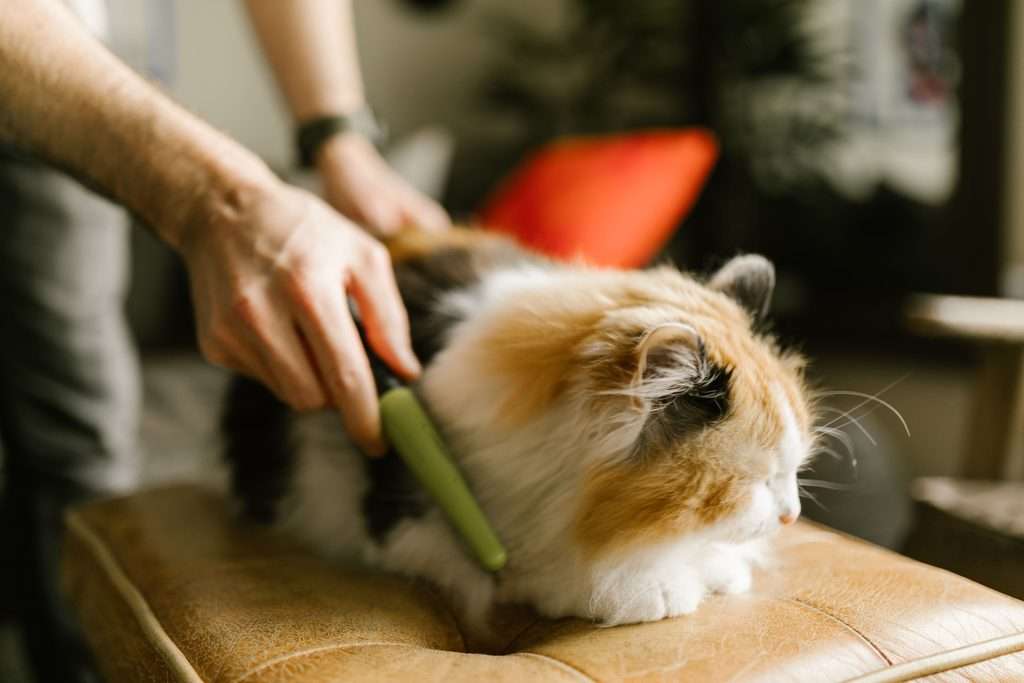
Regular brushing is not only about maintaining attractive fur. It also helps remove loose hair before your cat can swallow large amounts of it during self-grooming.
Cats naturally ingest some hair when licking their coats. Most of this hair passes through the digestive system, but some may accumulate in the stomach and eventually be vomited as a hairball.
How Does Skipping Brushing Affect Hairballs and Daily Comfort?
When loose hair remains trapped in the coat, your cat may ingest more of it while attempting to clean itself. This can increase the amount of swallowed hair, although hairball development also depends on individual grooming habits, coat type, and digestive health.
Frequent hairballs should not be considered an unavoidable consequence of owning a long-haired cat. Repeated vomiting, unproductive retching, reduced appetite, or constipation deserves veterinary attention.
Neglected grooming can also create a cycle of discomfort:
- Loose hair accumulates in the coat.
- Small tangles develop and become harder to remove.
- Tight mats make ordinary movement and self-cleaning uncomfortable.
- Your cat may avoid licking or cleaning certain areas.
- More loose hair and debris remain trapped in the coat.
This cycle can be particularly challenging for senior cats, overweight cats, and animals with limited mobility.
How to restore a healthy grooming routine
You do not need complicated grooming equipment to begin improving your cat’s coat. A consistent, gentle routine is usually more beneficial than occasional long grooming sessions.
Follow these practical recommendations:
- Choose the right brush: Short-haired cats often benefit from a soft-bristle brush or grooming glove, while long-haired cats generally need a suitable metal comb.
- Start with short sessions: Brush for a few minutes and gradually increase the time as your cat becomes comfortable.
- Check sensitive areas: Pay particular attention to the belly, armpits, behind the ears, and hindquarters.
- Reward cooperation: Use praise and small treats to create positive associations with grooming.
- Inspect the skin: Look for redness, dandruff, wounds, fleas, unusual lumps, or areas of tenderness.
- Seek professional help: If the coat contains large, tight, or painful mats, contact a veterinarian or experienced cat groomer.
Grooming frequency depends on coat type and individual needs. As a general starting point, many short-haired cats benefit from weekly brushing, while long-haired cats often need daily attention.
Remember that bathing is not a replacement for brushing. Most healthy cats do not need frequent baths, and bathing a tangled coat can make some mats harder to remove. Use only cat-safe products when bathing is necessary.
When should you consult a veterinarian?
Arrange a veterinary examination if you notice:
- Red, swollen, bleeding, or painful skin.
- A persistent unpleasant smell coming from the coat or skin.
- Sudden changes in grooming behavior.
- Excessive dandruff, hair loss, or greasy fur.
- Repeated vomiting or difficulty passing stool.
- Resistance to being touched in areas that were previously comfortable.
A veterinarian can determine whether the problem is related to matting, parasites, skin disease, dental discomfort, arthritis, or another medical condition.
Conclusion
Skipping regular grooming for too long can gradually transform a healthy-looking cat’s coat into a tangled, dirty, and uncomfortable covering. Loose hair accumulates, knots become difficult to remove, and severe matting may cause skin irritation and restrict comfortable movement.
Although cats are naturally skilled at cleaning themselves, some need additional help, particularly long-haired breeds, senior cats, and animals with mobility or weight-related difficulties.
The best approach is to establish a simple grooming routine suited to your cat’s coat. Regular brushing, gentle inspections, and early attention to tangles can prevent many avoidable problems.
A clean, well-maintained coat is not simply a matter of appearance. It is an important part of your cat’s everyday comfort and general well-being.
Frequently Asked Questions
1. How long can a cat go without being brushed?
It depends on the cat’s coat type. Short-haired cats may only need weekly brushing, while long-haired cats often require daily grooming to prevent tangles and mats.
2. Can a cat’s fur become permanently damaged without grooming?
Neglecting grooming does not necessarily cause permanent damage to hair growth. However, severe matting can cause skin injuries and discomfort. Veterinary treatment may be necessary to remove extensive mats safely.
3. Do indoor cats need regular grooming?
Yes. Indoor cats still shed hair, accumulate dead skin cells, and develop tangles. Their grooming needs depend on coat length, age, and individual health.
4. Can I remove matted fur from my cat myself?
Small, loose tangles may be gently separated using an appropriate comb. However, tight mats should be handled by a qualified groomer or veterinarian. Never cut close to the skin with scissors.
5. Does poor grooming cause hairballs in cats?
Insufficient brushing can leave more loose hair in the coat, which cats may swallow while licking themselves. Regular brushing can help reduce the amount of swallowed hair, although it cannot eliminate hairballs completely.