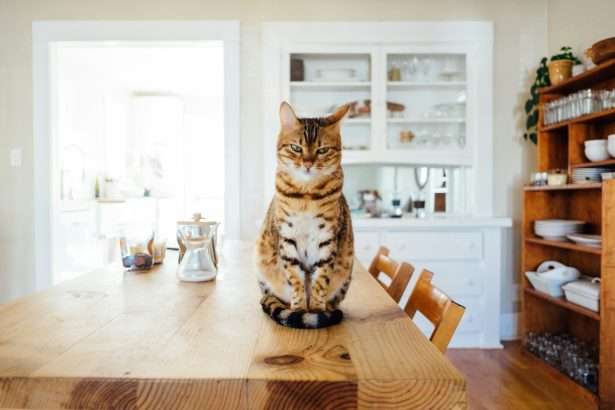

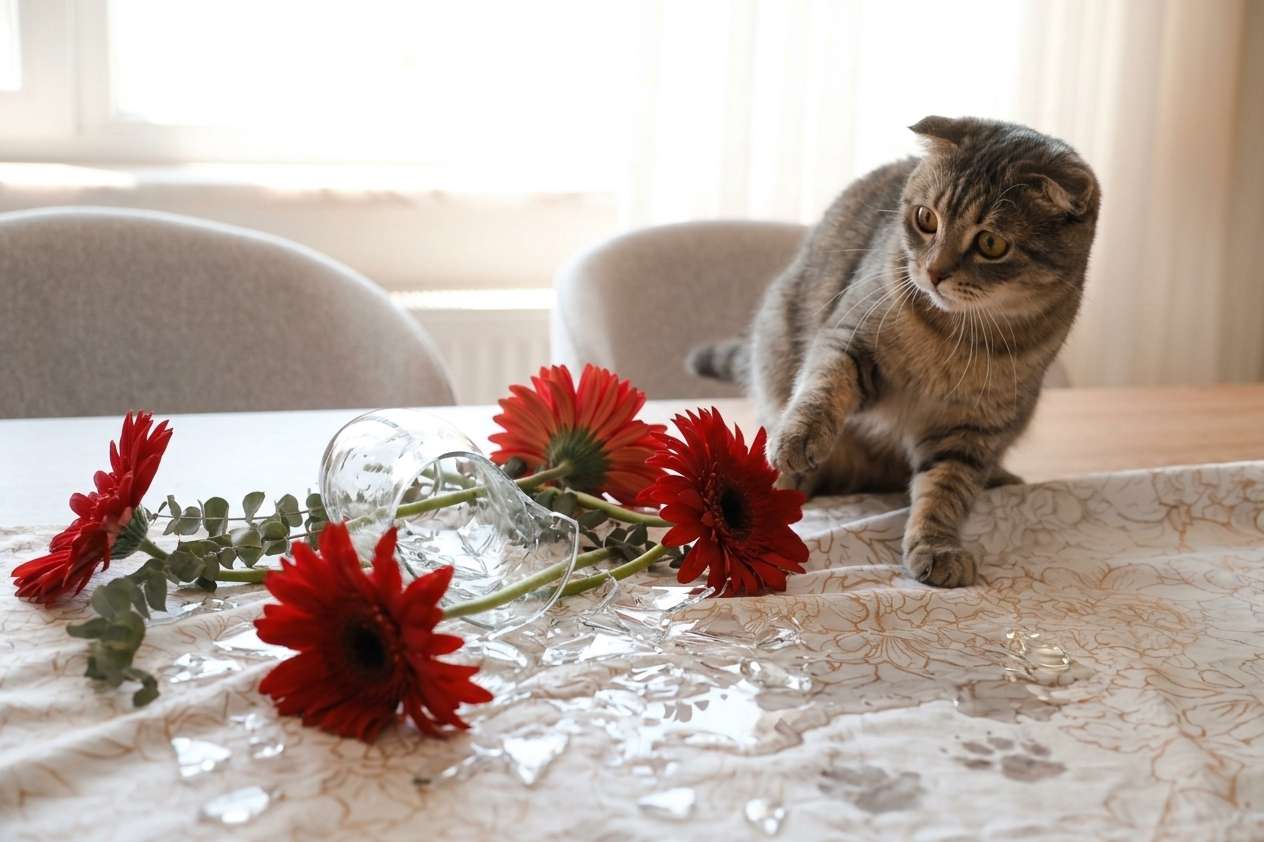
Have you ever watched your cat stare at a glass, pen, or small decoration on a table before slowly pushing it onto the floor? This familiar behavior can be amusing at first, but it quickly becomes frustrating when your favorite belongings are involved.
Many cat owners wonder whether their pets do this deliberately to cause trouble. In most cases, however, cats knock things over because of natural hunting instincts, curiosity, boredom, or learned behavior—not because they want revenge.
Understanding the reasons behind this habit can help you protect your belongings while giving your cat healthier ways to explore, play, and interact with you.
At Cat CareHub, we believe that understanding feline behavior is an important part of responsible cat ownership. This guide explains the science behind this common habit and provides practical, cat-friendly strategies to reduce it.

1. Why Cats Knock Objects Off Tables: Instinct and Curiosity
How Hunting Behavior and Exploration Influence Cats
Cats are natural predators. Even well-fed indoor cats retain many behaviors associated with hunting, including stalking, tracking, pawing, chasing, and pouncing. These instincts help explain why a small object moving across a table can attract so much attention.
When a cat touches a pen or nudges a bottle cap, it may be exploring how the object moves. If the object slides, rolls, or falls, the resulting movement can trigger further interest.
This behavior resembles aspects of hunting, where a cat uses its paws to investigate and control potential prey.
Curiosity also plays an important role. Cats explore their surroundings through several senses, including touch, smell, hearing, and sight. A new object on a familiar surface may become interesting simply because its texture, shape, or movement is unfamiliar.
The sound of an object hitting the floor can provide another source of stimulation. Your cat may then follow the object, inspect it, or try to move it again.
This helps explain why some cats repeatedly push the same object over, even when it does not contain food or appear useful to them.
Age can influence the behavior, too. Kittens and young cats often have abundant energy and use play to develop coordination and explore their environment. Adult cats may continue the habit because it remains entertaining or has previously produced a rewarding result.
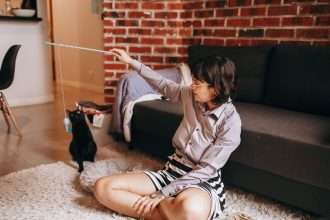
To encourage safer outlets for these instincts, offer interactive play with suitable toys. Feather wands, lightweight balls, and other cat-safe toys can provide opportunities to stalk, chase, and pounce.
For additional information about your cat’s surroundings and everyday needs, visit Cat CareHub.
2. Attention, Boredom, and Learned Behavior
Why Your Cat May Repeat the Same Habit
Although instinct explains part of the behavior, learning can make it more frequent. Cats observe what happens after their actions and can develop habits when particular behaviors consistently produce rewarding outcomes.
1. Your reaction may reinforce the behavior
Imagine that your cat begins pushing a glass toward the edge of your desk. You immediately look up, call its name, or walk over to stop it.
From your perspective, you are preventing an accident. From your cat’s perspective, touching the glass has produced an immediate response from an important person.
Even negative attention, such as shouting, may be rewarding for a cat that wants interaction. Veterinary behavior guidance from VCA Animal Hospitals explains how consequences such as attention or food can unintentionally strengthen unwanted behaviors.
2. Boredom can encourage unwanted activities
Indoor cats need more than food, water, and a comfortable place to sleep. They also benefit from opportunities to play, investigate, climb, scratch, and solve simple challenges.
When the environment offers little stimulation, everyday household objects can become convenient entertainment.
A cat that repeatedly knocks objects off shelves may be seeking movement, sensory stimulation, or an activity that breaks up a quiet day.
3. Hunger and routines may contribute
Some cats become particularly active around their usual feeding times. If knocking objects onto the floor regularly results in an early meal, the cat may learn to repeat the behavior.
This does not necessarily mean the cat is genuinely hungry every time. It may have learned that a particular action reliably produces food or attention.
How to Identify Your Cat’s Motivation
Instead of assuming every incident has the same cause, observe the circumstances surrounding the behavior.
Ask yourself:
- Does your cat do it mainly when you are working or using your phone?
- Does the behavior happen shortly before meals?
- Does your cat immediately chase the object after it falls?
- Does it occur more frequently when your cat has been alone for several hours?
- Does your cat have enough suitable toys and climbing opportunities?
These observations can help you distinguish exploratory play from attention-seeking or a lack of stimulation.
Keep a simple record of when the behavior happens and what follows it. Over several days, a pattern may emerge that makes it easier to choose an effective solution.
3. How to Stop Cats From Knocking Things Over
Environmental Changes and Positive Reinforcement
The most effective approach combines prevention, enrichment, and consistent responses. The aim is not to suppress normal feline instincts but to direct them toward safer activities.
1. Remove tempting and dangerous objects
Start by protecting your home. Move fragile decorations, glasses, medication, small objects, and valuable electronics away from table edges and other accessible surfaces.
Store small items in closed drawers or cupboards whenever possible. Secure objects that could fall and injure your cat, and keep electrical cables out of reach.
Pay particular attention to hot drinks, breakable containers, and items that could cause choking if swallowed.
Houseplants also deserve consideration. Some plants are toxic to cats, and falling pots can injure them. Check plant safety before allowing your cat access to them.
2. Provide suitable places to climb
Cats often appreciate elevated spaces where they can observe their surroundings and rest undisturbed.
A stable cat tree, window perch, or securely installed shelf can provide a more appropriate alternative to climbing onto a desk or kitchen counter.
Place these resources where your cat can use them comfortably and safely. Ensure shelves are firmly attached and that climbing routes do not require dangerous jumps.
If your cat enjoys watching outdoor activity, a secure window perch may provide valuable visual stimulation.
3. Schedule interactive play
Rather than waiting until your cat begins pushing objects around, introduce regular play sessions throughout the day.
Use a wand toy to encourage stalking and chasing, or roll a lightweight ball across an open floor. Allow your cat opportunities to catch the toy so the activity feels satisfying.
Several short sessions may be more practical than relying on one long session. Adjust the duration to your cat’s age, health, and energy level.
Rotate toys periodically to maintain interest, and supervise toys containing strings, feathers, or small detachable parts.
4. Encourage independent activities
Food puzzles and suitable treat-dispensing toys can give cats something constructive to do when you are busy.
You can also hide small portions of their usual food in safe, accessible locations to encourage searching and exploration. Account for these portions within the cat’s daily food allowance to avoid overfeeding.
For more ideas about making your cat’s daily environment stimulating, explore the care resources available at Cat CareHub.
5. Reward the behavior you want
If your cat chooses its scratching post, plays with an appropriate toy, or settles on its own perch, reward that behavior with praise, attention, or a suitable treat.
If you notice your cat preparing to push an object off a table, calmly redirect its attention before the object falls. Offer an alternative activity rather than shouting or chasing the cat.
Avoid physical punishment and frightening deterrents. These approaches can increase stress without teaching the cat what it should do instead.
Consistency matters. Everyone in the household should follow the same approach so that the cat receives predictable feedback.
4. When to Be Concerned About This Cat Behavior
Recognizing Safety Risks and Unusual Changes
Knocking objects off tables is usually a normal feline behavior, particularly when it occurs during play or exploration. Nevertheless, the consequences can sometimes be dangerous.
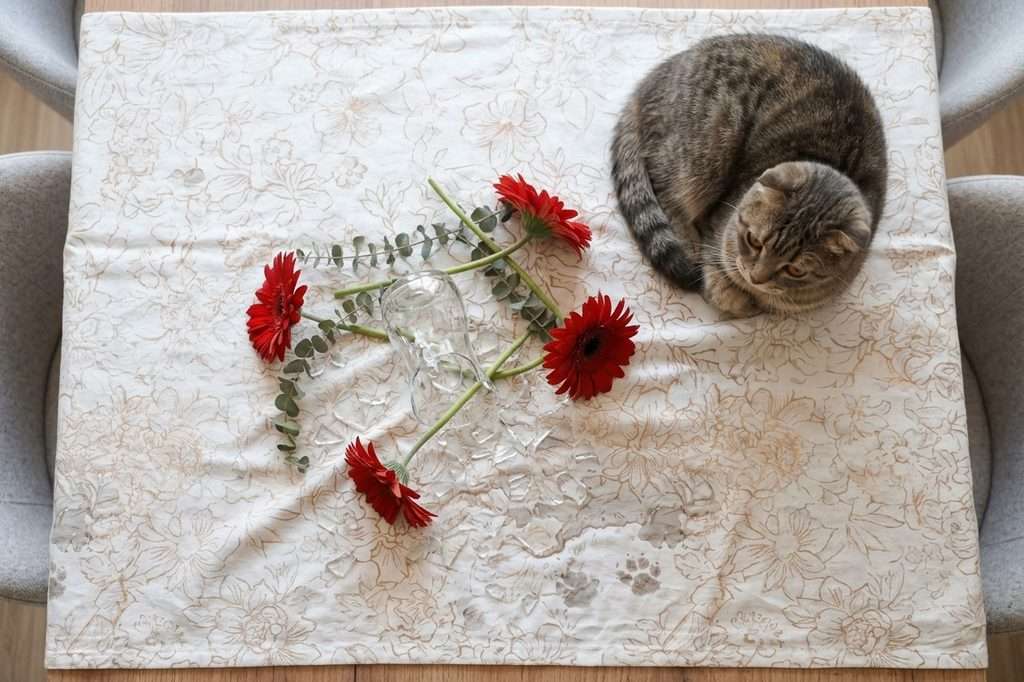
A falling glass may shatter and injure your cat’s paws. Small objects can present choking or swallowing hazards, while knocked-over liquids may damage electrical equipment or expose your pet to harmful substances.
For this reason, prevention is especially important in kitchens, workspaces, and rooms containing fragile items.
You should also pay attention to changes in your cat’s behavior. If a previously calm cat suddenly begins knocking objects over much more frequently, consider whether something has changed in its environment or daily routine.
New household members, changes in feeding schedules, reduced playtime, and competition with other pets may affect behavior.
If the change is sudden, persistent, or accompanied by signs such as reduced appetite, unusual vocalization, confusion, pain, or changes in normal activity, arrange a veterinary assessment. Behavioral changes can sometimes accompany medical problems, particularly in older cats.
A veterinarian can help determine whether the behavior is related to the environment, stress, or an underlying health concern.
A Practical Seven-Day Plan
To make improvements easier to monitor, try this simple routine:
- Days 1–2: Identify frequently targeted objects and remove fragile or dangerous items from reach.
- Days 3–4: Introduce interactive play and provide a suitable climbing or observation area.
- Days 5–6: Add a food puzzle or another safe enrichment activity and reward appropriate play.
- Day 7: Review your observations. Note whether the behavior has decreased and identify situations that still trigger it.
Seven days is a starting point, not a guaranteed deadline. Established habits may take longer to change, and some cats need additional environmental adjustments.
The most important factor is consistency. Continue rewarding desirable behavior and making unsafe activities less accessible.
Final Thoughts
Cats knock things over for several understandable reasons, including hunting-related instincts, curiosity, boredom, and learned associations with attention or food.
Although the behavior can be frustrating, it rarely reflects spite or a desire to upset the owner.
By protecting vulnerable objects, providing stimulating activities, maintaining predictable routines, and rewarding appropriate behavior, you can reduce unwanted incidents without compromising your cat’s well-being.
Remember that every cat has an individual personality. Observe your pet, identify the situations that encourage the behavior, and adapt your approach accordingly.
A stimulating environment and patient, consistent training can help your cat express its natural instincts in safer ways—while keeping more of your belongings where they belong.
“Until one has loved an animal, a part of one’s soul remains unawakened.”
Anatole France