


Does Your Cat Recognize Your Daily Routine Before You Even Begin?
Cats are often more observant than their owners realize. Your cat may appear to be sleeping peacefully while you prepare for work, make breakfast, or get ready for bed. Yet, the moment you begin a familiar activity, your cat might already be waiting nearby.
This behavior raises an interesting question: Does your cat recognize your daily routine before you even begin?
The answer is yes, to a certain extent. Cats are capable of learning familiar patterns, remembering repeated experiences, and associating environmental signals with events that happen regularly. They may recognize the sound of your alarm, the movement of your morning preparations, or even subtle changes in your behavior that suggest you are about to leave home.
Although cats do not necessarily understand time in the same way humans do, they can develop remarkably accurate expectations about everyday activities. Understanding how this happens can help explain why your cat sometimes seems to know what you are going to do before you actually do it.
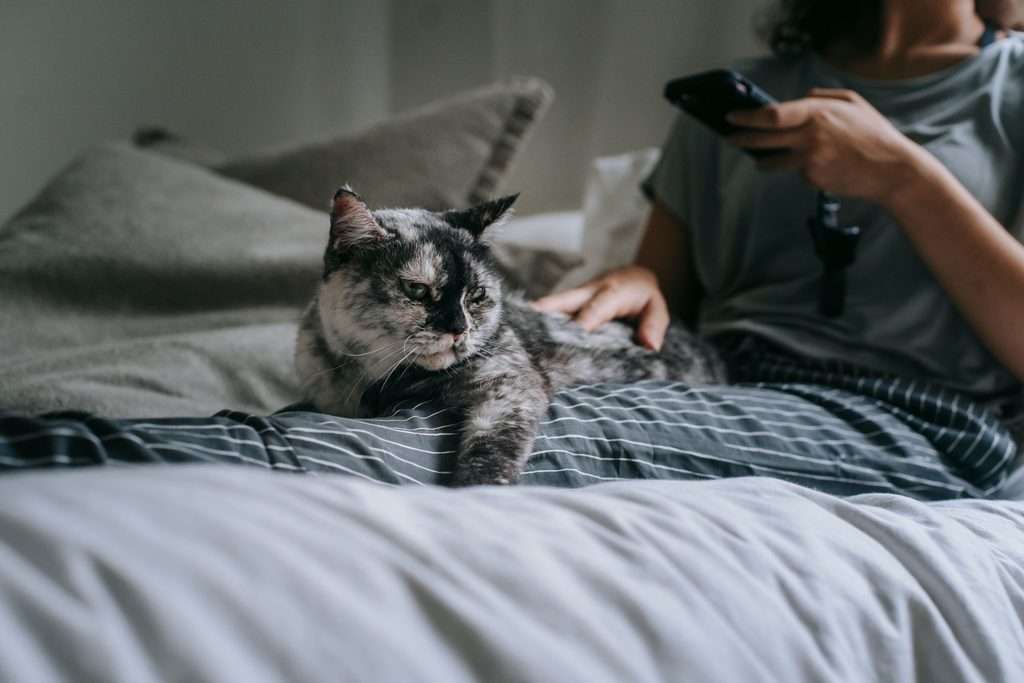
1. How Do Cats Learn and Remember Your Daily Routine?
Cats develop an understanding of their surroundings through observation, repetition, and association. When the same activities happen in a familiar order, they gradually learn to recognize the signals connected to those activities.
For example, imagine that you wake up at 7 a.m., walk into the kitchen, prepare coffee, and then fill your cat’s food bowl. After experiencing this sequence repeatedly, your cat may begin associating your alarm, footsteps, and movement toward the kitchen with breakfast.
This is a form of associative learning. Your cat does not need to understand the entire human routine. Recognizing a few consistent signals may be enough to anticipate what happens next.
Several everyday experiences can contribute to this learning:
- Feeding habits: Your cat learns when meals usually happen and may wait near the feeding area before you prepare food.
- Morning activities: Opening curtains, switching on lights, and getting dressed can become familiar signals.
- Work preparations: Picking up your keys, putting on shoes, or carrying a bag may indicate that you are about to leave.
- Evening habits: Changing clothes, turning off lights, and settling on the sofa can signal that the household is becoming quieter.
Over time, these repeated experiences create expectations. Your cat may respond to the earliest recognizable signal rather than waiting for the actual event.
Can Cats Remember the Order of Your Activities?
Yes. Cats can learn associations between events and recognize familiar sequences, although this does not mean they understand human schedules exactly as we do.
For instance, a cat that regularly receives food after its owner finishes brushing their teeth may begin waiting in the kitchen as soon as that activity ends.
An important distinction is that cats are responding to learned patterns, not necessarily thinking about future events in a human-like way.

Research and professional feline behavior guidelines recognize the importance of predictability and familiarity in cats’ everyday lives. The AAFP and ISFM Feline Environmental Needs Guidelines explain how familiar surroundings and predictable interactions support feline wellbeing.
This helps explain why a cat can appear to know what comes next even when its owner has not yet started the activity itself.
2. What Signals Help Your Cat Predict What You Will Do Next?

Your daily routine is made up of many small signals that you may barely notice. However, your cat can become familiar with these changes because they happen repeatedly and often lead to something important.
Cats use several senses to gather information about their environment. They pay attention to sounds, movements, smells, and changes in household activity.
Rather than relying on one particular signal, your cat may combine several clues to recognize what is about to happen.
Sounds, Body Language, and Environmental Changes
Some of the strongest routine-related signals are ordinary household sounds.
Consider these examples:
1. The sound of your alarm
If your alarm rings at approximately the same time every morning, your cat may learn that this sound is followed by movement, attention, and eventually breakfast.
2. Your footsteps
Cats can become familiar with the sound and rhythm of their owner’s footsteps. Walking toward the kitchen may create different expectations from walking toward the front door.
3. Keys and shoes
Picking up your keys, opening a wardrobe, or putting on outdoor shoes can become recognizable signals that you are preparing to leave.
4. Changes in lighting
Opening curtains in the morning or switching off lights in the evening provides environmental information that helps establish a familiar daily rhythm.
5. Your body language
Cats may notice changes in your posture, walking speed, movements, and attention. For example, quickly collecting your belongings may signal that you are preparing to go somewhere.
Smell may also contribute to how cats recognize familiar people and environments. Their highly developed sense of smell helps them gather information that humans might overlook.
A particularly interesting example occurs when your cat approaches the food bowl before you have touched the food container. The animal may have recognized several familiar signals that usually precede feeding.
These behaviors are not evidence that cats can predict the future. They demonstrate how effectively they can use repeated environmental information.
3. Can Cats Recognize Time and Predict Your Return Home?
Many cat owners notice that their pets become active around familiar times of the day. Some wait near the door before their owner returns, while others begin requesting food shortly before their usual feeding time.
This raises another question: can cats actually tell time?
Cats do not need to read a clock to develop a sense of daily timing. Their activity is influenced by biological rhythms, environmental conditions, and repeated experiences.
How Biological Clocks and Daily Patterns Work
Cats have internal biological rhythms, including circadian rhythms that help regulate periods of activity and rest across approximately 24 hours.
Light exposure, feeding opportunities, household activity, and other environmental signals can influence these patterns.
Domestic cats are also generally crepuscular, meaning they often show increased activity around dawn and dusk, although individual activity patterns vary.
“In ancient times cats were worshipped as gods; they have not forgotten this.”
Terry Pratchett
A 2025 study published in Applied Animal Behaviour Science examined the activity rhythms of group-living domestic cats using activity monitors. Researchers observed two daily activity peaks that coincided with caretaker activities, including feeding and cleaning.
This finding is interesting because it suggests that human activities and feline activity patterns can become closely associated. However, it does not prove that cats understand clock time or can predict exactly when an individual owner will return.
You may notice several examples of this behavior:
- Your cat becomes active shortly before its usual breakfast.
- It waits near the entrance around the time you normally arrive home.
- It becomes more playful when evening activities usually begin.
- It approaches you when you typically prepare for bedtime.
There is also an important difference between anticipating your return and recognizing the sounds that accompany it.
Your cat might not know that you are five minutes away. Instead, it may respond to a familiar pattern of daylight, neighborhood sounds, household activity, or other environmental changes.
If you want to explore how changes in your schedule affect these expectations, read our guide on why cats behave differently when their owners change their routines.
4. How Can You Use Your Cat’s Routine Recognition to Improve Its Daily Life?

Understanding how cats recognize familiar patterns can help you create a more comfortable and predictable home environment.
Cats generally benefit from knowing when important activities are likely to happen. Consistency can make everyday experiences easier to anticipate and may help reduce stress associated with uncertainty.
However, maintaining a healthy routine does not mean every activity must happen at exactly the same minute.
The goal is to establish familiar patterns while allowing enough flexibility for normal changes in household life.
Practical Ways to Build a Healthy and Predictable Routine
Consider these recommendations:
1. Maintain reasonably consistent feeding times
Offer meals at predictable intervals appropriate for your cat’s age, health, and nutritional requirements. Avoid making unnecessary changes to feeding schedules.
2. Establish regular play sessions
Interactive play provides opportunities to express natural hunting behaviors. Try scheduling short sessions around times when your cat is naturally active.
3. Create a familiar bedtime routine
Quiet interaction, a comfortable sleeping area, and reduced household activity can help establish a predictable evening environment.
4. Avoid sudden changes whenever possible
If you need to change your working hours or feeding schedule, introduce adjustments gradually. This gives your cat time to become familiar with the new pattern.
5. Provide mental stimulation
Food puzzles, climbing spaces, scratching posts, and interactive toys help prevent boredom and provide opportunities for natural feline behaviors.
6. Pay attention to individual preferences
Not every cat follows the same schedule. Some prefer morning play, while others become more active in the evening. Observe your cat and adapt activities to its individual needs.
For more practical guidance, explore our daily cat care routine guide.
It is also important to recognize when a change in your cat’s behavior might indicate something more than a disrupted routine.
For example, sudden withdrawal, reduced appetite, unusual vocalization, changes in litter box habits, or excessive sleeping should not automatically be attributed to schedule changes.
If these behaviors are new, persistent, or accompanied by other concerning signs, arrange a veterinary examination. Routine recognition is a normal ability, but it does not explain every behavioral change.
Conclusion
Your cat may recognize your daily routine long before you begin a familiar activity because it has learned to associate repeated sounds, movements, environmental changes, and biological rhythms with particular events.
Whether your cat waits near the food bowl before breakfast or sits beside the door before you leave, these behaviors demonstrate how effectively cats learn from their surroundings.
The best way to support this ability is to provide a predictable daily environment, regular positive interaction, and opportunities for play and exploration.
Most importantly, remember that your cat is not simply following a timetable. It is learning the patterns of a shared life with you, one familiar experience at a time.

Frequently Asked Questions (FAQ)
1. Can cats recognize their owner’s daily routine?
Yes. Cats can learn repeated patterns and associate familiar sounds, movements, and activities with events such as feeding, playing, and their owner’s departure.
2. How does my cat know when I am about to feed it?
Your cat may recognize signals such as walking toward the kitchen, opening food containers, or approaching its feeding station. Repeated experiences help it associate these signals with mealtime.
3. Can cats tell when their owners are coming home?
Some cats appear to anticipate their owner’s return. They may respond to familiar environmental patterns, daily timing, and sounds associated with the owner’s arrival. However, this does not mean they can accurately predict the exact time.
4. Do cats become stressed when their daily routine changes?
They can. Unexpected changes to feeding, household activity, and social interaction may cause stress in some cats. Gradual adjustments and maintaining familiar activities can help them adapt.
5. Do all cats follow the same daily routine?
No. Individual routines differ depending on age, personality, health, environment, and previous experiences. Some cats are more active in the morning, while others prefer evening activities.