
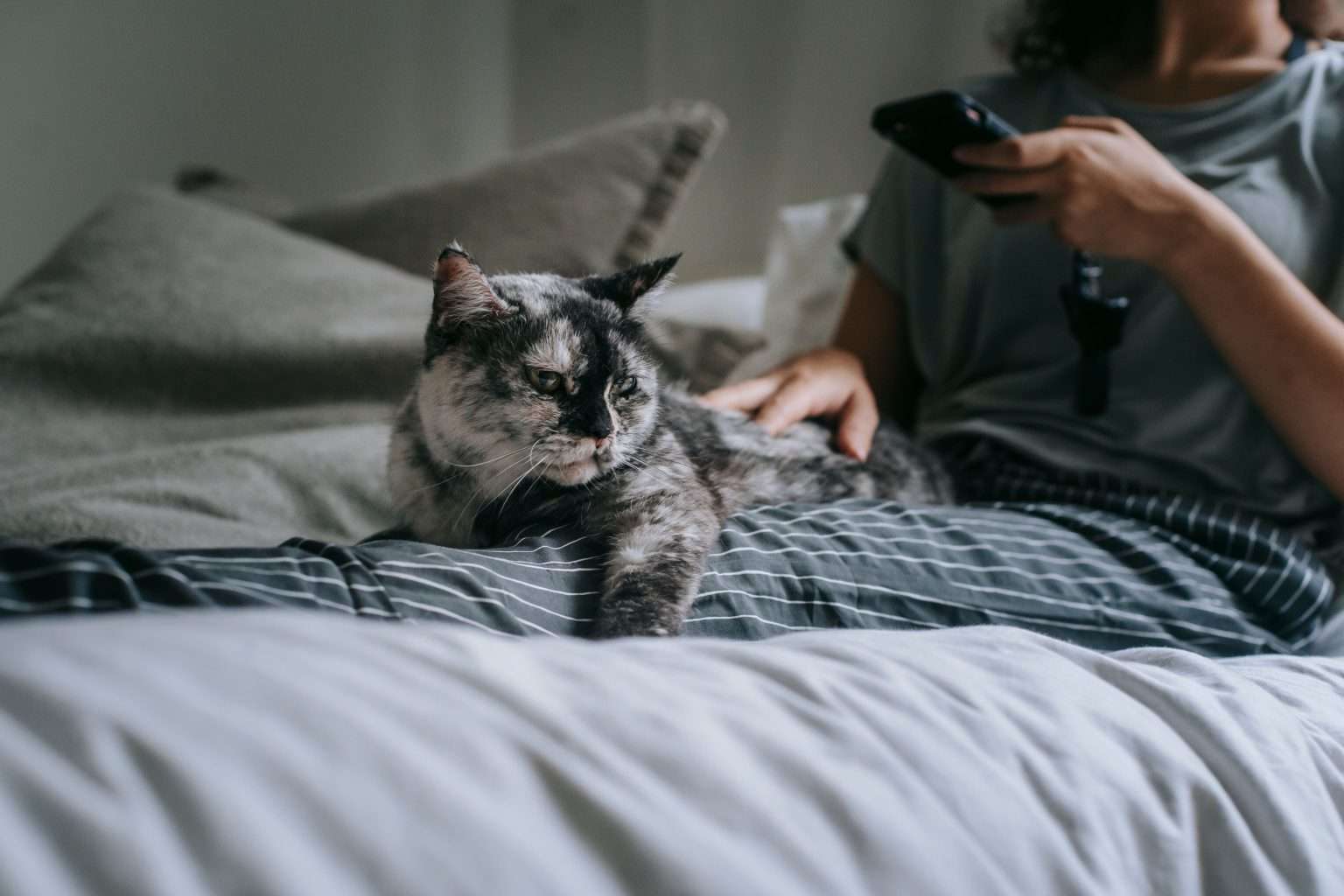
Why Does My Cat Follow Me but Refuse to Sit on My Lap?
Your cat can feel safe around you and still prefer a nearby spot to your lap. A cat that trails you around the home may choose the floor, a chair, or a windowsill when it is time to rest. That choice does not mean you have failed to build trust or affection.
- Cat Follows Me but Won’t Sit on My Lap: What Does It Mean?
- What Makes a Cat Prefer the Floor or a Nearby Spot?
- How Can You Tell Whether Your Cat Wants Touch?
- Could Pain or Stress Explain a Change in Lap Habits?
- How Can You Make Your Lap and Its Surroundings More Inviting?
- How Can You Build Positive Lap Associations?
- What Are Other Signs Your Cat Loves and Trusts You?
- Conclusion
- FAQ
- Can a cat be affectionate but dislike being held?
- Why does my cat sniff my hand and then walk away?
- Should I stop petting my cat if its tail starts flicking?
- Can I use treats to encourage my cat to sit on my lap?
- Why does my cat sit on my clothes instead of on me?
- When should a change in lap habits prompt a vet visit?
It can still feel like rejection when your cat follows you from room to room but settles beside you instead. Many people want their pets to enjoy cuddling, yet each cat has its own comfort level with closeness. A calm, cat-led approach can help you understand the behavior and make contact feel inviting without turning lap-sitting into a demand. A close bond can include companionship without cuddling.

Key Takeaways
- Following you can show comfort without inviting touch.
- Each cat has its own preferred distance and resting places.
- Watch your cat’s body language before petting.
- Make a nearby resting place comfortable and easy to leave.
- Reward voluntary approaches with positive reinforcement.
- Ask a veterinarian about sudden or persistent behavior changes.
Cat Follows Me but Won’t Sit on My Lap: What Does It Mean?
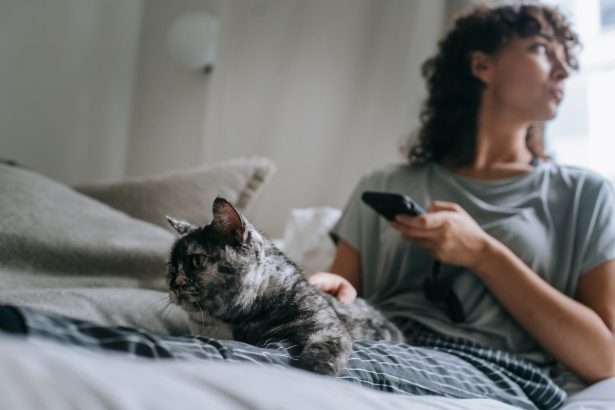
Following you from room to room can show that your cat is comfortable keeping you close, even when lap contact is not appealing. A cat may choose your company while keeping room to move, stretch, or leave. Being nearby can be a meaningful sign of trust.
Following or lounging near you can reflect confidence and security, but those behaviors do not necessarily mean your cat wants to be petted. Wanting company and wanting touch are separate choices. Your cat may enjoy sharing the room without being picked up or held in place.
Treat proximity as a welcome sign of companionship, not automatic permission to touch.
That distinction can make daily life feel less confusing. Your cat might follow you into the kitchen, nap on a nearby chair, or settle at your feet while you work. Those choices can be part of a close relationship, even if the lap is not a favorite spot.
Affection also depends on the individual cat and the situation. A cat may seek attention at one time and prefer quiet space later. Letting your cat move freely helps keep shared time comfortable for both of you.
What Makes a Cat Prefer the Floor or a Nearby Spot?
A cat can follow you throughout the day and still choose a resting place that feels more comfortable than your lap. Personal preference is one reason, and the spot may offer a better view, more room, or a familiar surface. A cat’s usual choice is useful information, not a verdict on your bond.
Personality, activity, and preferred distance
Cats differ in personality, energy, and preferred level of contact. Some enjoy a lap after play, while others like to rest where they can stretch out or watch the room. Age and activity can also affect where a cat settles. An older cat may favor an easy-to-reach place over a high seat.
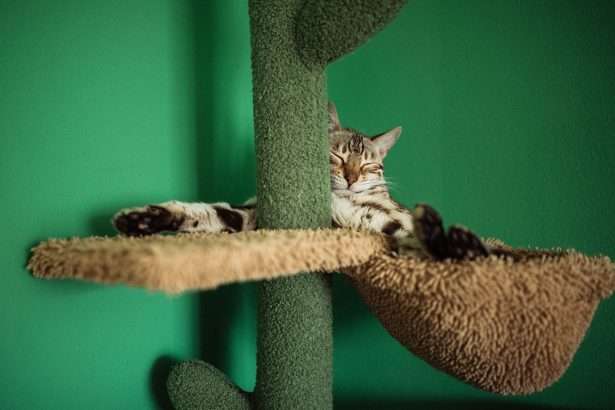
Some cats prefer an elevated perch, even when an owner is close by. A shelf, cat tree, or window seat can offer a view and a clear way down. The floor may suit a cat that likes space to sprawl or prefers to stay near a familiar route through the room.
Early handling and socialization
Early experiences with people can shape a cat’s comfort with handling, but they do not determine every adult preference. The proposed sensitive period for kitten socialization is between 2 and 7 weeks, or up to 9 weeks in some studies. Timing may differ among kittens.
A 2025 survey of 2,238 U.S. cat owners found that 85.8% valued body-language education in kitten socialization programs, and 83.1% valued getting kittens used to handling. Handling kittens for 5-15 minutes per day during early life was associated with a shorter delay before they approached unfamiliar people later.

Notice these four factors over time rather than drawing a conclusion from one moment:
- Where the cat chooses to rest.
- Whether it seeks height or stays low.
- How it responds to handling.
- Whether its behavior has changed.
Repeated choices across different places and situations offer a clearer picture than one isolated decision. Consider the cat’s repeated choices as a guide to its preferred kind of closeness.
How Can You Tell Whether Your Cat Wants Touch?
Hold your hand still at a comfortable distance and let your cat decide whether to close the gap. Look for an active choice, such as leaning toward or touching your hand. A sniff alone is not an invitation to pet.
Use this four-step check: offer your hand at a distance, wait for your cat to initiate contact, pet briefly where it rubs against you, then pause and let it choose whether to return. Cats may prefer different touch locations and styles, and many dislike being picked up.
| Cue | What it may indicate | Response |
| Leaning toward or touching the hand | Willingness to interact | Let the cat choose contact |
| Soft eyes and forward ears | Possible willingness | Offer brief, gentle contact |
| Sniffing without leaning or touching | No initiated contact yet | Wait |
| Rippling skin, flattened or flicking ears, tail thumping or thrashing, or head turning toward the hand | Stop signal | Stop petting |
Body language makes more sense as a group of signs than as one isolated detail. A relaxed posture and forward ears can support a positive reading, while restlessness or a turning head calls for space. Give your cat time to decide without moving your hand closer. End the interaction as soon as your cat shows a stop signal.
Could Pain or Stress Explain a Change in Lap Habits?
If your cat’s reluctance to approach or interact is new, consider whether comfort or stress has changed. A change from the usual pattern matters more than a long-standing preference for a nearby seat. Arthritis can make jumping, climbing, resting, grooming, and petting less comfortable.
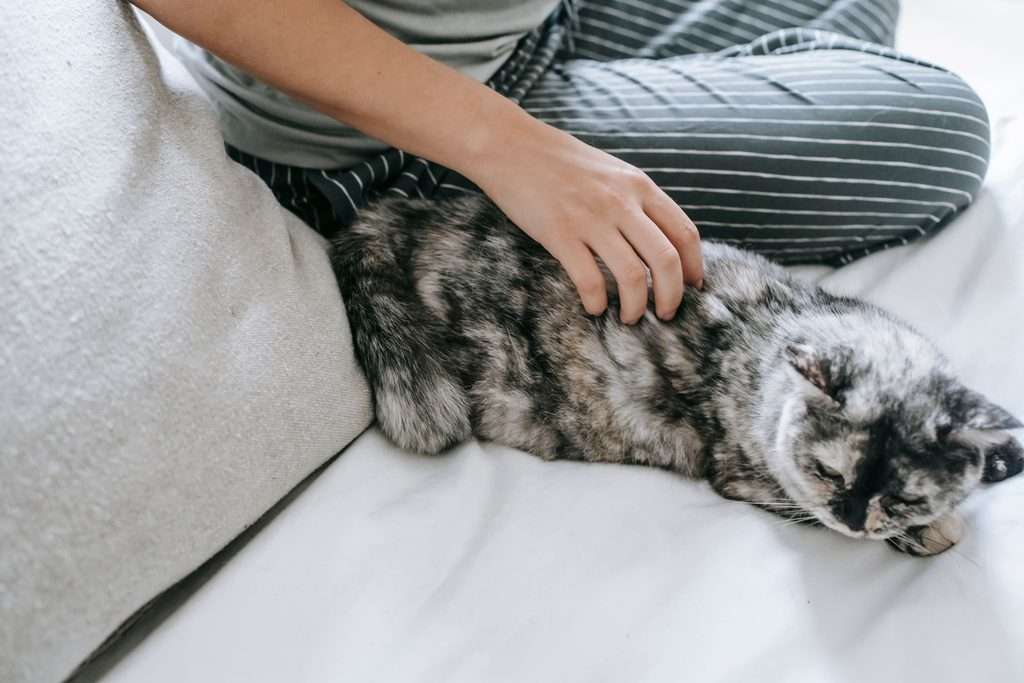
About 60% of cats show signs of arthritis by age 6, and up to 90% have the disease by age 12. Pain may make a jump onto a lap harder, or make touch uncomfortable. A cat may also become less interactive, withdraw, or react with irritability when petted.
Stress, anxiety, or fear can lead to hiding or avoiding interaction, especially after a change in the household or routine. Look for a cluster of changes rather than treating one quiet day as proof of a problem. Keep an eye out for:
- Stiffness after resting.
- Reluctance to jump or climb.
- Reduced grooming.
- Hiding or withdrawal.
- Irritability during petting.
A familiar place that suddenly becomes hard to reach may be part of the change. A cat might stop climbing onto furniture or choose a lower resting spot while still seeking company. Sudden or persistent behavior changes warrant a veterinary consultation because they can signal an underlying medical problem. Arrange a veterinary consultation for a sudden or persistent shift in behavior.
How Can You Make Your Lap and Its Surroundings More Inviting?
Start with a quiet seat, a comfortable posture, and a familiar blanket if your cat already likes one. A relaxed setting can make the area more appealing without making your cat feel trapped. Keep the cat’s route away from the seat clear.
A soft blanket can offer a comfortable surface with a familiar scent. The wider environment matters too: a busy room, sudden noise, or a blocked path may make another resting place more attractive. A preferred perch beside you lets your cat stay close without choosing your lap.
| Setup | What to arrange | Why it may help |
| Familiar blanket | Soft, familiar blanket on the lap | Comfortable surface with a recognizable scent |
| Quiet spot | Calm seating area | Less disturbance during rest |
| Nearby perch | Preferred resting spot beside you | Closeness without lap-sitting |
| Temperature choice | Cooler resting place accessible | Lets the cat move away from warmth |
Cats may seek warm bedding and other warm places. Hill’s Pet gives 86°F to 100°F as the temperature range cats prefer, but your cat still needs the option of a cooler spot. A nearby floor cushion or open patch of floor can offer that choice. Keep a comfortable alternative resting spot available beside the seating area.
How Can You Build Positive Lap Associations?
Reward the first small approach your cat chooses, rather than trying to place the cat on your lap. Positive reinforcement means rewarding a behavior you want to encourage. Let your cat set the pace, including whether it ever sits on your lap.
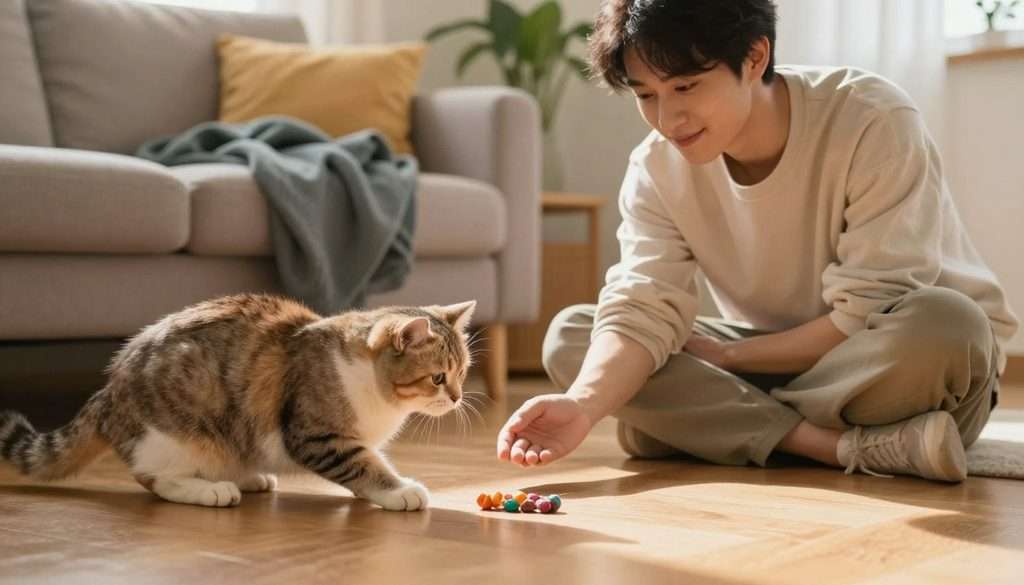
Reward small steps the cat chooses
Clicker training means using a click to mark a desirable behavior at the moment it happens. The click can mark a voluntary step, such as approaching you or settling nearby, then a treat can reward it. Gradual rewards can move from treats on the floor near you to the couch beside you, and then to your lap if your cat chooses.
The Merck Veterinary Manual recommends positive reinforcement and describes clicker training as a way to mark and reward desirable behavior while gradually shaping a cat’s actions. Keep each reward tied to a choice your cat makes. A toy may also suit a cat that enjoys play more than food, but the goal remains a pleasant experience, not a forced position.
Keep sessions brief and voluntary
Short sessions help keep practice easy to leave. Aim for about five minutes, and let your cat walk away whenever it chooses. If your cat leaves after one approach, that still counts as a voluntary interaction. You can end there without calling it a failed session.
Keep the lap linked with calm, pleasant moments rather than medication, restraint, or other unpleasant tasks. Do not lift your cat onto your lap to speed up progress. The cat needs room to decide whether to return, and a quiet end can preserve a positive association.
Progress may be uneven: one day your cat may sit beside you, while another day it may choose the floor. Reward the behavior that happens, not a result you hoped to get. Finish each session while your cat can still leave freely.
What Are Other Signs Your Cat Loves and Trusts You?
A cat may show affection in small, familiar ways without settling on your lap. Quiet gestures can communicate closeness, though their meaning depends on the moment. Look at the whole situation rather than treating one action as proof.
Possible signs cat loves you include behaviors such as:
- Slow blinking.
- Head butting or cheek rubbing.
- Purring or kneading.
- Bringing toys.
- Grooming.
Cheek rubbing can share scent, while bringing toys may be a way to invite interaction. Kneading often appears during relaxed moments, but it can also happen with stress, frustration, or uncertainty. A cat’s body and the setting help explain whether a gesture seems comfortable.
Return a slow blink instead of staring directly at your cat.
Some cats show affection through a quick head nudge and then return to their own spot. Others may groom a person or rest nearby without asking for touch. Notice which gestures your cat repeats when it appears relaxed.
Conclusion
Your cat’s choice to stay close can matter even when its preferred seat is beside you. A nearby resting place can be part of a trusting bond, and affection does not have to look like lap cuddling.
Choose one comfortable spot close to where you spend time, then let your cat approach or pass it by. That small change respects your cat’s choice while keeping companionship easy to find. Offer a calm place to rest and let your cat choose the distance.
FAQ
Can a cat be affectionate but dislike being held?
Yes, a cat can be affectionate and dislike being held. Many cats prefer to stay on the floor or furniture, where they can move freely, and may enjoy company without being picked up. Your cat might seek you out, rub against you, or rest nearby while still avoiding arms or laps. Respecting that preference can help keep interactions comfortable.
Why does my cat sniff my hand and then walk away?
Sniffing your hand lets your cat gather information, but it does not by itself invite petting. Wait to see whether your cat leans toward the hand or touches it. If the cat simply sniffs and leaves, let it go without following or reaching after it. That keeps the greeting on the cat’s terms and leaves room for another approach later.
Should I stop petting my cat if its tail starts flicking?
Yes, stop petting when your cat’s tail starts flicking or thumping. Those movements can signal that your cat has had enough, especially alongside tense posture, flattened ears, or a turning head. Move your hand away and give your cat space. Stopping promptly can prevent a calm interaction from becoming uncomfortable or leading to a swat or bite.
Can I use treats to encourage my cat to sit on my lap?
Yes, you can use treats to reward voluntary steps toward your lap. Start by rewarding your cat near you, then near the couch, and only reward a lap visit if your cat chooses it. Keep practice brief and let your cat leave freely. Treats should make the choice pleasant, not lure your cat into a position where it feels stuck.
Why does my cat sit on my clothes instead of on me?
Your clothes may offer a comfortable surface and a familiar scent, which can make them appealing resting places. A cat can enjoy that scent while still preferring not to sit directly on a person. Notice whether the cat chooses clothing in particular locations or at certain times. You can place a familiar garment near your seat if you want to offer a nearby resting option.
When should a change in lap habits prompt a vet visit?
Seek veterinary advice for a sudden or persistent behavior change, especially when it comes with stiffness, reduced grooming, withdrawal, or irritability. Pain can affect jumping, climbing, and tolerance for touch, while stress may also change how a cat interacts. A veterinarian can assess what may be behind the shift. Share when the change began and any other new behaviors you have noticed.